
Render
RENDER Rank #76Price chart
What is Render?
Origins and GPU work
Jules Urbach founded Render Network through OTOY. Its original token launched in 2017 and the network opened publicly in 2020. Creators submit graphics-rendering jobs to distributed GPU operators. Supported engines include OctaneRender, Blender Cycles and Redshift. A dedicated compute network also serves AI inference and other computing workloads.
Token and work credits
The active RENDER token uses Solana's SPL standard. Legacy Ethereum RNDR can be upgraded through the network's migration system. Customers burn RENDER to obtain dollar-denominated Render Credits. These credits are non-transferable and used to request GPU work. Node operators receive RENDER rewards according to completed work and availability.
Burns, emissions and governance
Render's Burn and Mint Equilibrium combines usage-linked burns with scheduled token emissions. Reward issuance follows an approved schedule rather than mirroring each customer's payment. Emission allocations cover node rewards and foundation operations. Holders vote on Render Network Proposals that can change allocations and expand supported workloads. The Render Network Foundation administers the model and coordinates network development.
Where to trade RENDER
95 exchanges · top 10
Live spot quotes from connected exchanges
RENDER funding rates
Live perpetual funding on every connected exchange. Positive = longs pay shorts.
Contracts & chains
Exact contract or mint per network — the identity layer used for DEX routing.
On-chain routes
Networks with a connected DEX routing adapter.
Render news
All newsGuides
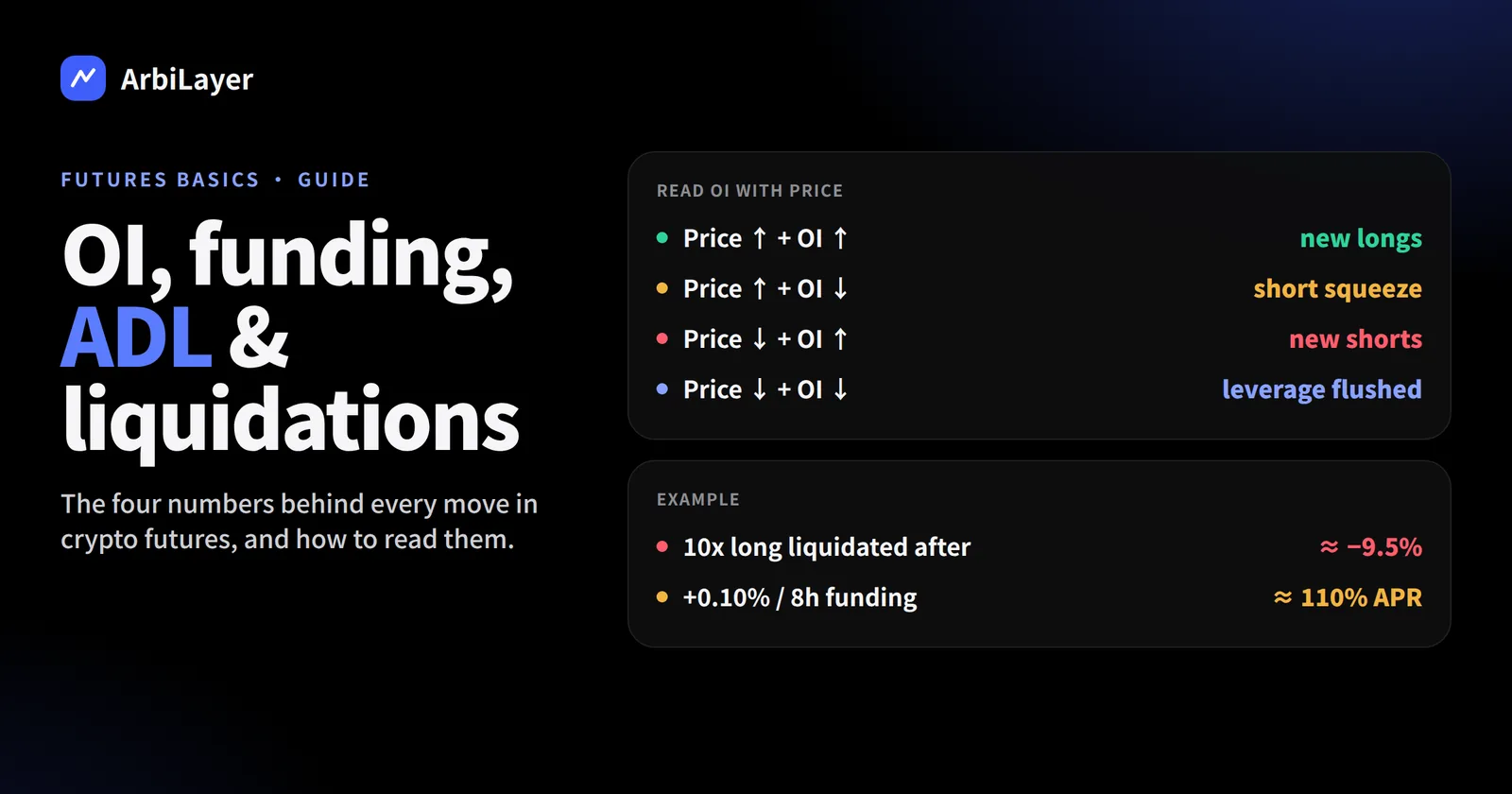 Open Interest, Funding Rates, ADL and Liquidations ExplainedWhat open interest tells you, how to read funding rates across exchanges, how liquidations and liquidation cascades work, and why auto-delev…
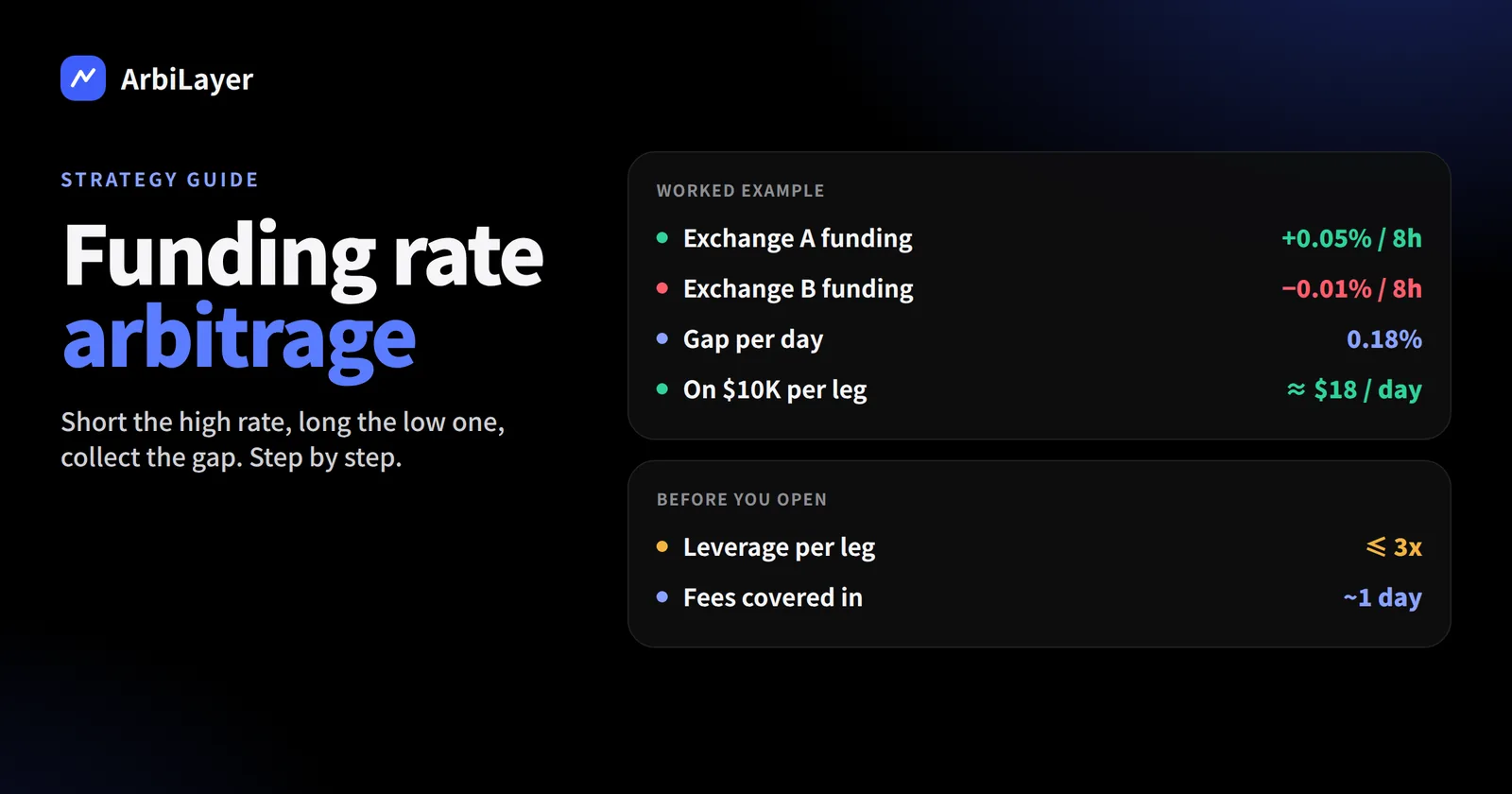 Funding Rate Arbitrage: A Step-by-Step GuideHow funding rate arbitrage works: short where funding is high, long where it is low, collect the gap. The maths, a worked example, how to fi…