How the profit is calculated
- Coins bought = amount ÷ buy price × (1 − buy fee)
- Coins that arrive = coins bought − withdrawal fee
- Proceeds = coins that arrive × sell price × (1 − sell fee)
- Net profit = proceeds − amount
Example: buy $1,000 of a token at $1.000 and sell at $1.020 (a 2% gap), with 0.1% fees on both sides and a 1-coin withdrawal fee. You buy 999 coins, 998 arrive, and you sell them for $1,016.94: a profit of $16.94 (1.69%).
What can make a spread unprofitable
- Transfer time: the gap often closes while the coin moves between exchanges.
- Deposits or withdrawals suspended on one side, which is often why the gap exists.
- Different tokens under the same ticker. Read why most crypto arbitrage spreads are fake.
- Order book depth: a large order moves the price against you.
Live spreads after fees, with contract checks and depth: arbitrage scanner.
Questions
What is a good arbitrage spread?
One that stays above the break-even spread after both trading fees, the withdrawal fee and the price movement during the transfer. On liquid coins that usually means well above 0.5%.
Why do big arbitrage spreads exist?
Most large spreads are not real: different tokens with the same ticker, suspended deposits or withdrawals, or tiny order books. Check all three before trading.
Can I do arbitrage without transferring coins?
Yes. Keep balances on both exchanges and buy on one while selling on the other at the same time, then rebalance later. Futures traders hedge with perpetuals instead.
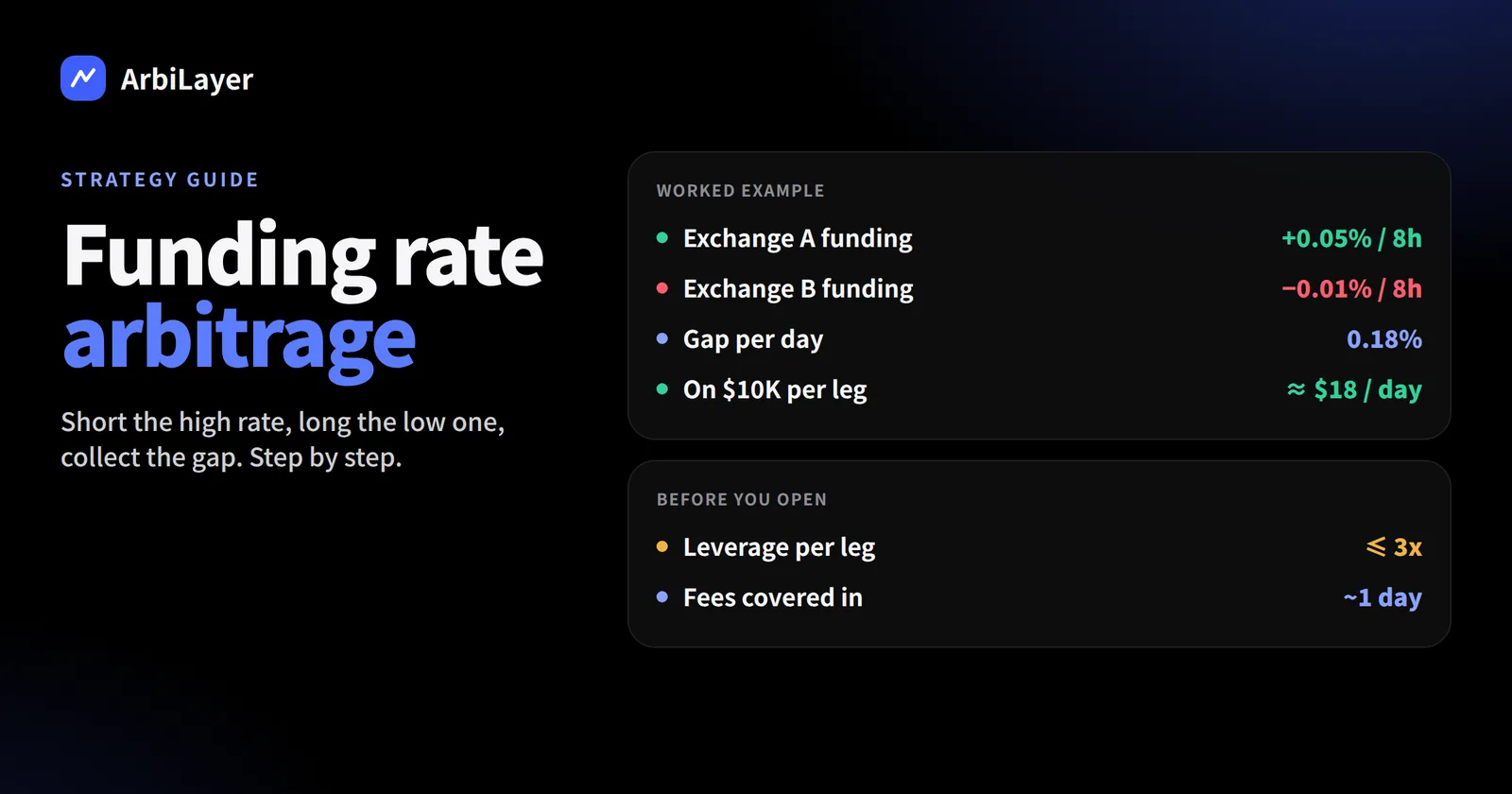 Funding Rate Arbitrage: A Step-by-Step GuideHow funding rate arbitrage works: short where funding is high, long where it is low, collect the gap. The maths, a worked example, how to fi…
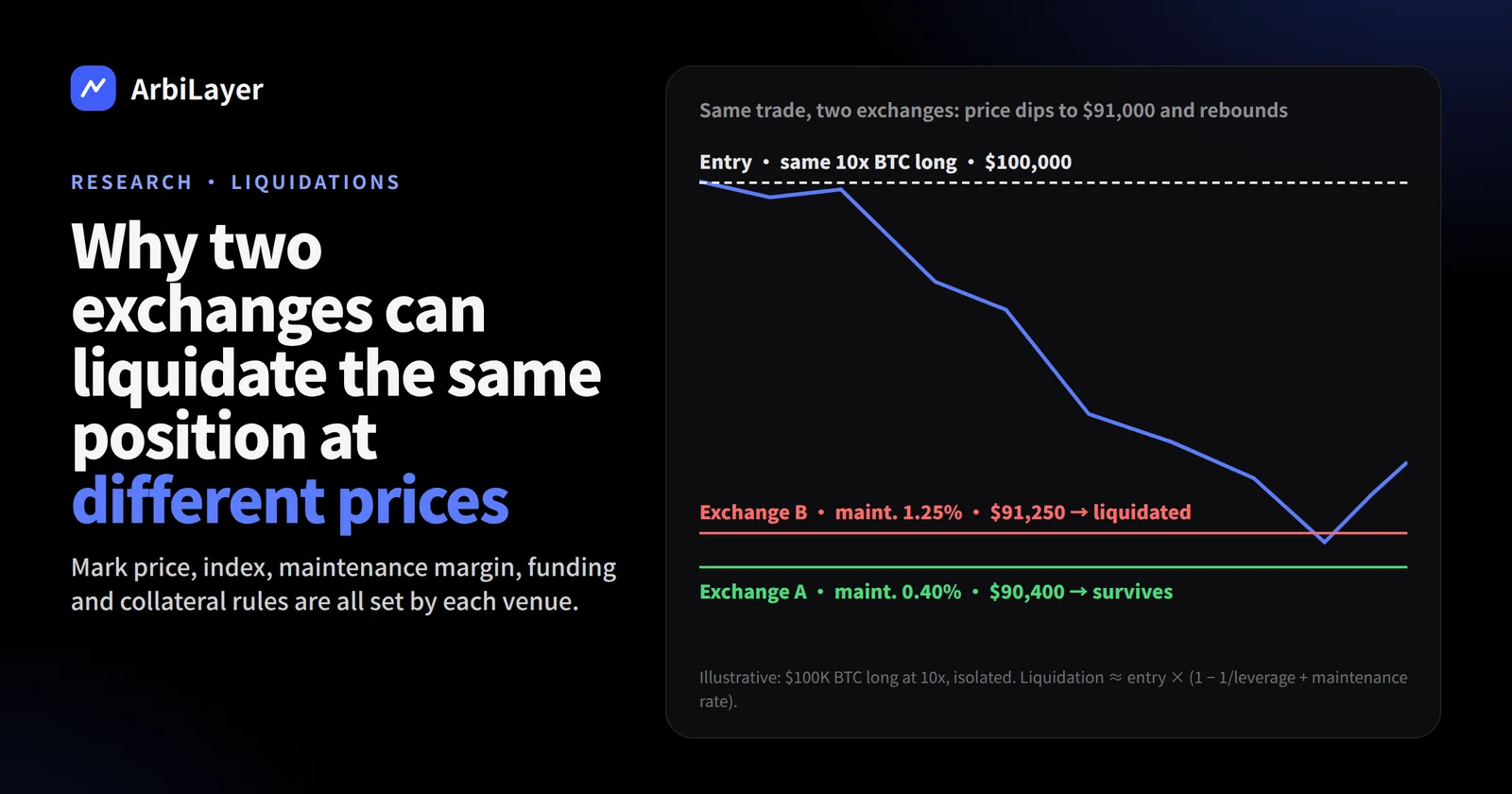 Why Two Exchanges Can Liquidate the Same Position at Different PricesMark price formulas, index constituents, maintenance margin tiers, funding and collateral rules are all set by each exchange — so the same l…
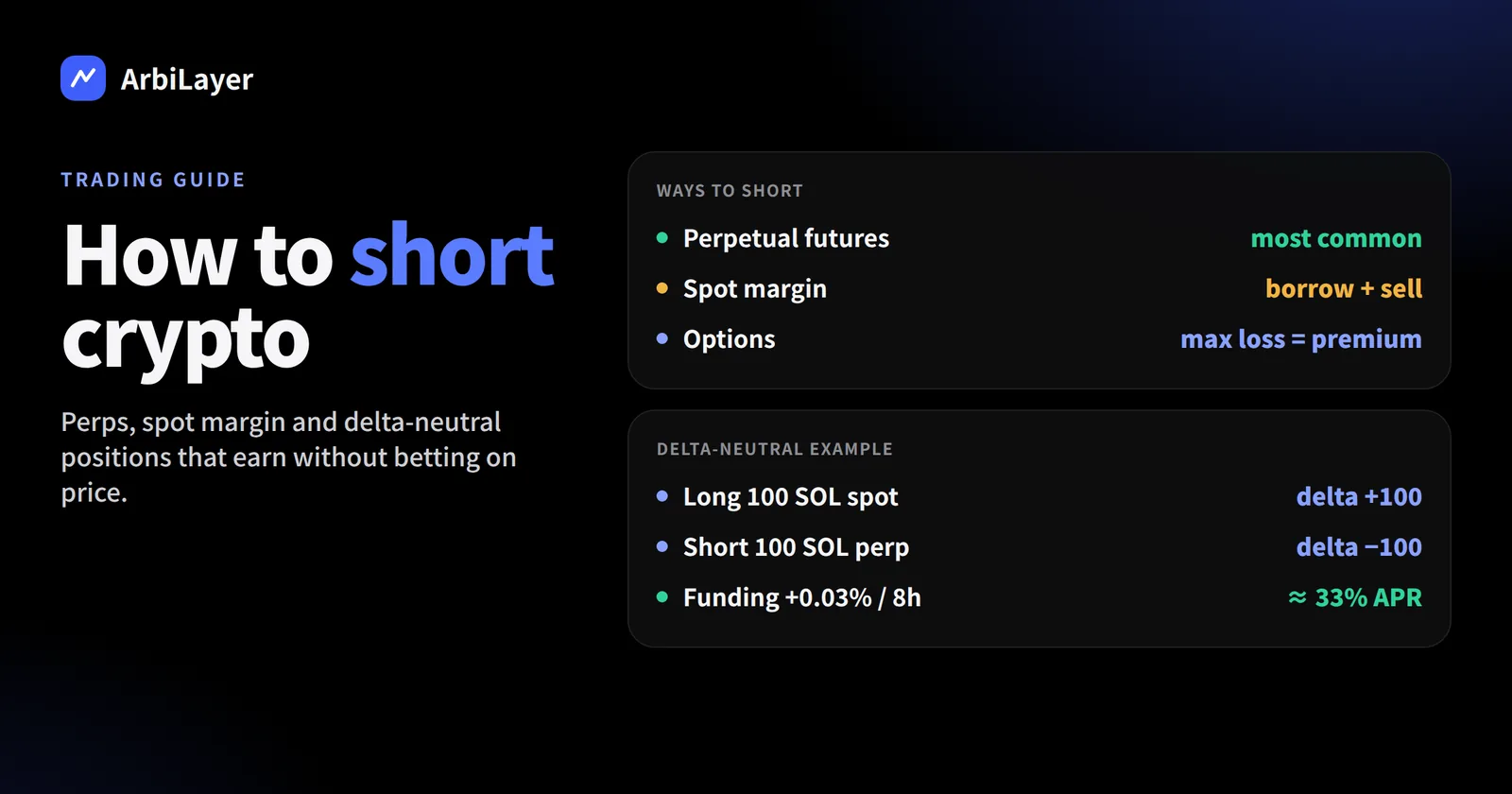 How to Short Crypto on Spot and Futures, and What Delta-Neutral MeansStep-by-step: shorting a coin with perpetual futures or spot margin, the costs (fees, funding, borrow interest), liquidation risk, and how d…