The formula
Position size = (balance × risk %) ÷ (distance from entry to stop + fees per coin). The direction is taken from the stop: a stop below entry is a long, above entry is a short.
Example: a $5,000 account risking 1% ($50) on a long at $150 with a stop at $144. The stop is $6 away, plus about $0.15 of fees per coin, so the position is about 8.1 coins, worth about $1,220. That needs no leverage at all; with $500 of margin it would be about 2.4×.
Why size by risk
- Every trade costs the same share of the account when it fails, whatever the coin's volatility.
- Leverage only changes how much margin you lock up, not how much you lose at the stop.
- Keep the liquidation price well beyond the stop. Check it with the liquidation calculator.
Questions
How much should I risk per trade?
Many traders risk 0.5–2% of their account per trade, so a losing streak doesn't wipe them out. This is a convention, not advice.
Does leverage change my risk?
Not if the stop-loss is set. Your loss at the stop depends on position size and stop distance. Leverage changes the margin you lock up and how close the liquidation price is.
Why include fees?
Opening and closing a position both cost a taker fee. On tight stops fees can be a large part of the loss.
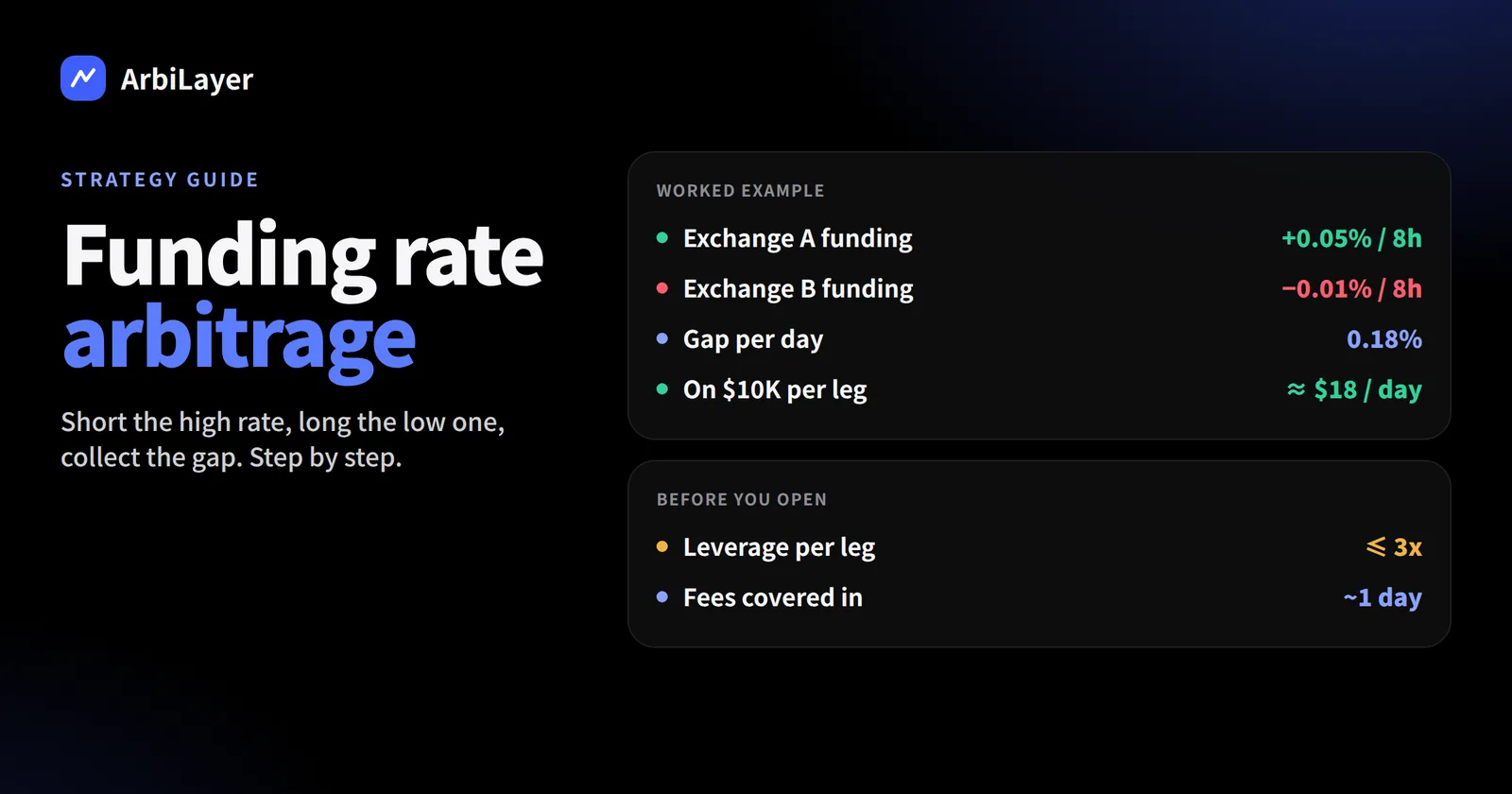 Funding Rate Arbitrage: A Step-by-Step GuideHow funding rate arbitrage works: short where funding is high, long where it is low, collect the gap. The maths, a worked example, how to fi…
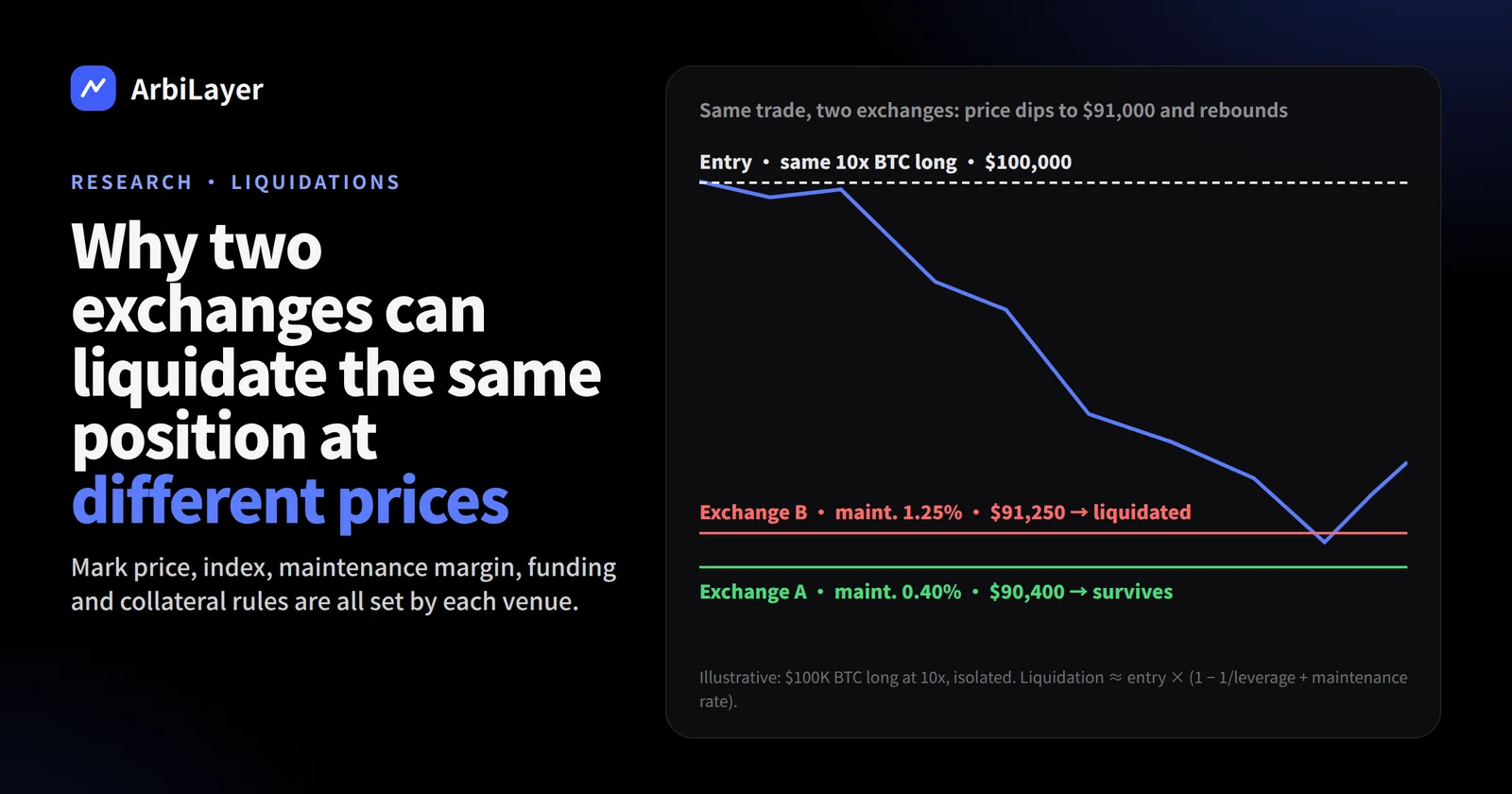 Why Two Exchanges Can Liquidate the Same Position at Different PricesMark price formulas, index constituents, maintenance margin tiers, funding and collateral rules are all set by each exchange — so the same l…
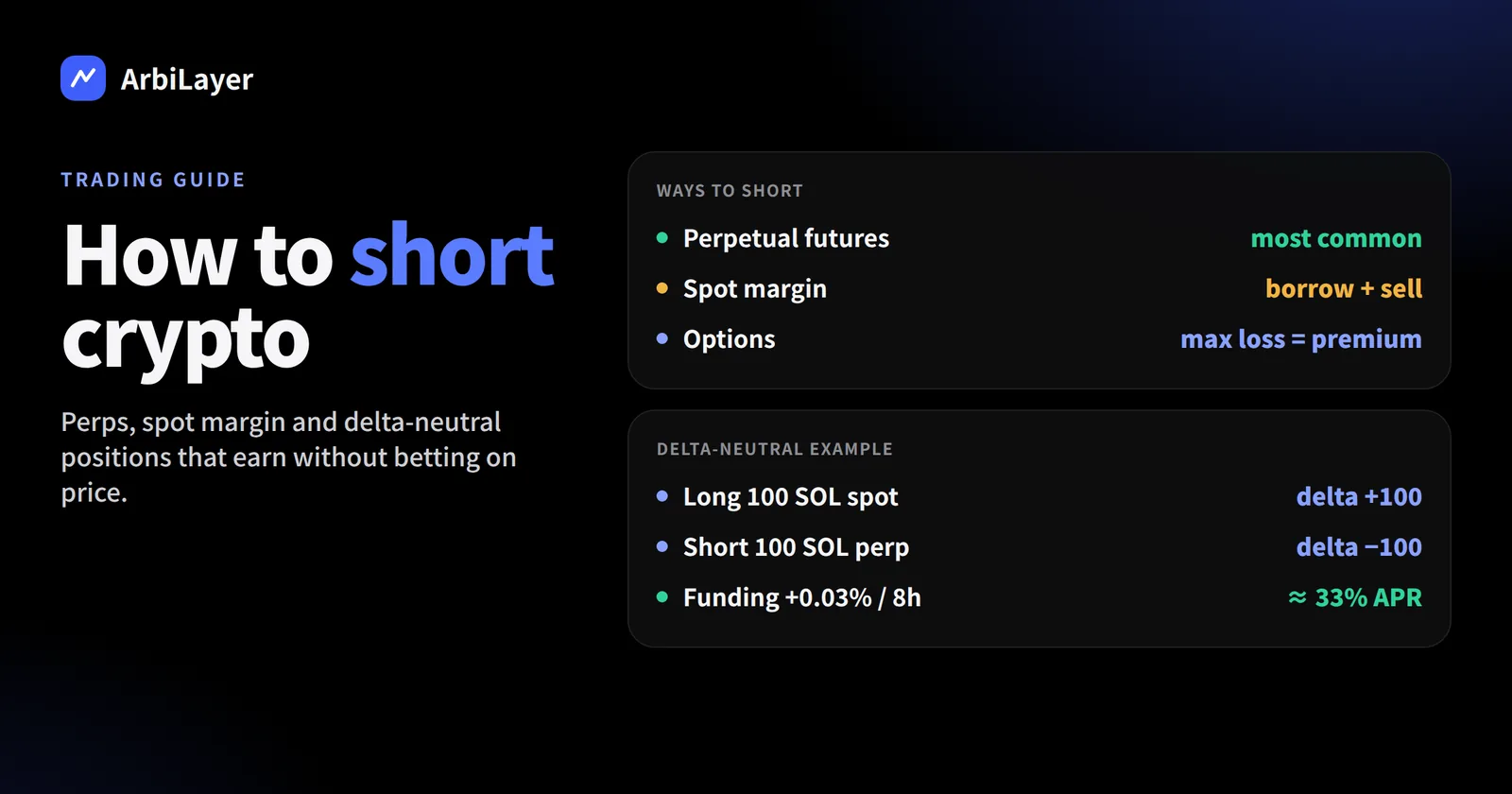 How to Short Crypto on Spot and Futures, and What Delta-Neutral MeansStep-by-step: shorting a coin with perpetual futures or spot margin, the costs (fees, funding, borrow interest), liquidation risk, and how d…